
Okonomiyaki is a popular savory Japanese pancake made from a batter mixed with various ingredients, topped with a savory-sweet sauce, mayonnaise, seaweed, and bonito flakes. It’s hearty, comforting, and surprisingly nutritious.
What Is Okonomiyaki?
お好み焼き (okonomiyaki) can be translated as “grilled as you like it.” Although the word pancake might make you imagine something sweet, fluffy, and milky, okonomiyaki is completely different — it’s fluffy, but delightfully savory.
The basic batter combines flour, grated yam (the key to achieving a soft, fluffy texture), and dashi stock (make sure the dashi is at room temperature), then mixed with eggs, seafood, and a generous amount of shredded cabbage. After pouring the batter onto the teppan, thin slices of pork belly are placed on top.
The best part is the finishing process: when it’s cooked, you brush on okonomiyaki sauce (a savory-sweet glaze), drizzle Japanese mayonnaise, and top it with bonito flakes and aonori.
Each bite is a mix of fluffy batter, umami-rich seafood, smoky bonito, and a balance of salty, sweet, and savory flavors.
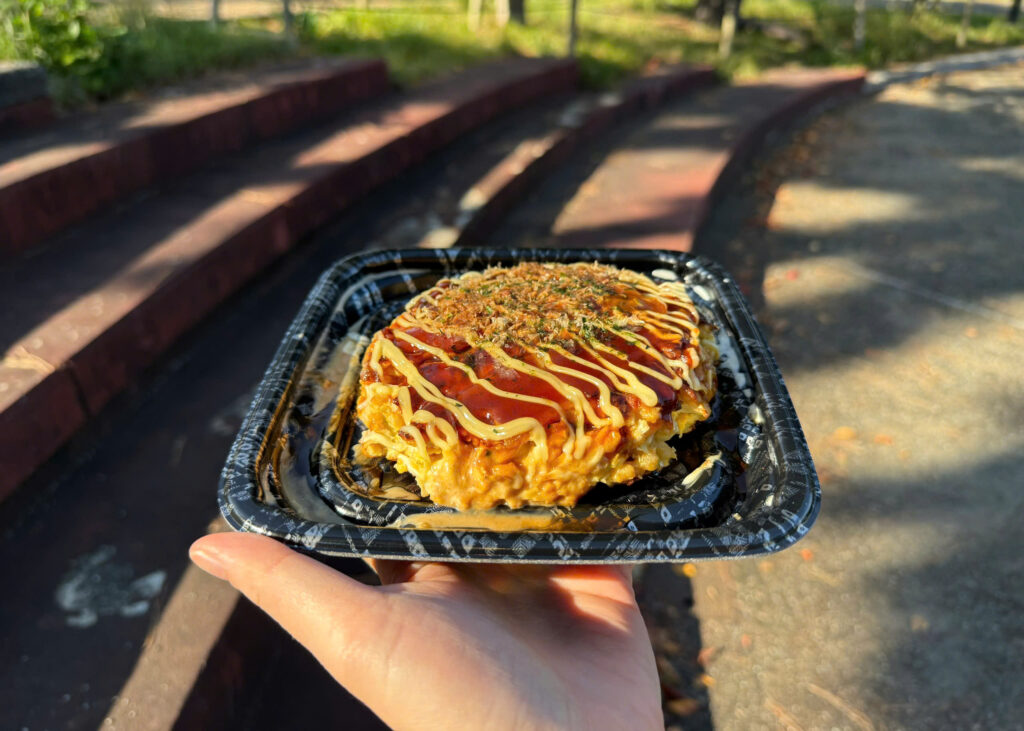
Ready-to-eat supermarket okonomiyaki in plastic packaging
Types of Okonomiyaki
1. Osaka-Style (Kansai-Style) Okonomiyaki
The most common style. The batter is mixed with flour, dashi, cabbage, eggs, and seafood, then topped with thin slices of pork belly. It’s cooked on a teppan, flipped, brushed with okonomiyaki sauce, drizzled with mayonnaise, and finished with seaweed, bonito flakes, and sometimes pickled ginger.
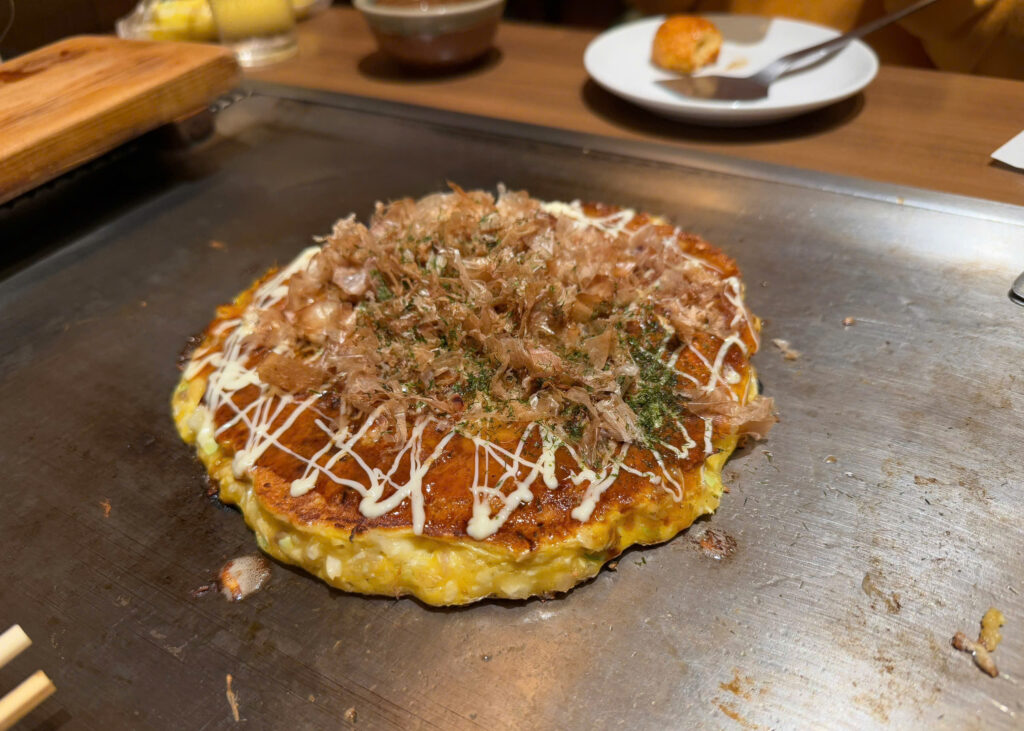
Freshly cooked okonomiyaki topped with bonito flakes and okonomiyaki sauce on a teppan grill
2. Hiroshima-Style Okonomiyaki
Instead of mixing everything together, ingredients are layered. Hiroshima-style also includes fried noodles (yakisoba or udon). The batter is cooked first, then topped with cabbage, bean sprouts, and other ingredients. The sauce tends to be sweeter, and while traditional Hiroshima-style didn’t include mayonnaise, these days it’s becoming more common.
Eating Okonomiyaki in Japan
-
At an Okonomiyaki Restaurant
I’ve eaten okonomiyaki many times, but the most unforgettable one was in Nara last November. I queued for about 40 minutes, which felt long, but after finishing the meal, it was absolutely worth the wait.
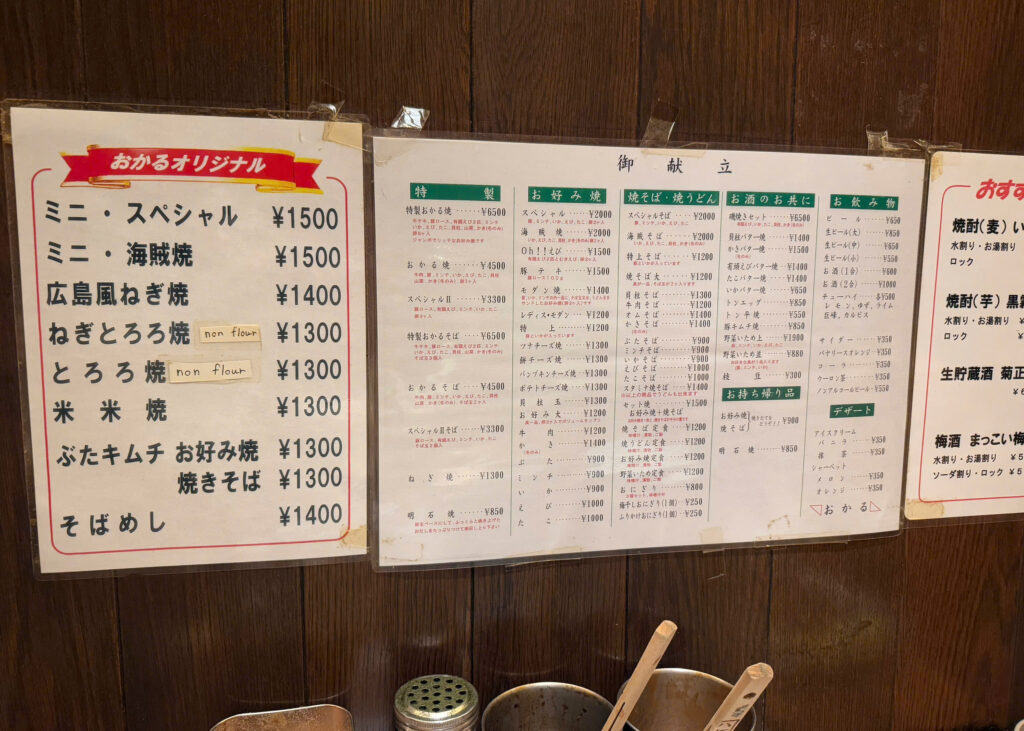
Menu of okonomiyaki restaurant in 2025
I ordered the スペシャルお好み焼き (Special Okonomiyaki), which was large enough for two people — perfect for sharing. The staff cooked it directly at the table, so you could watch the whole process.
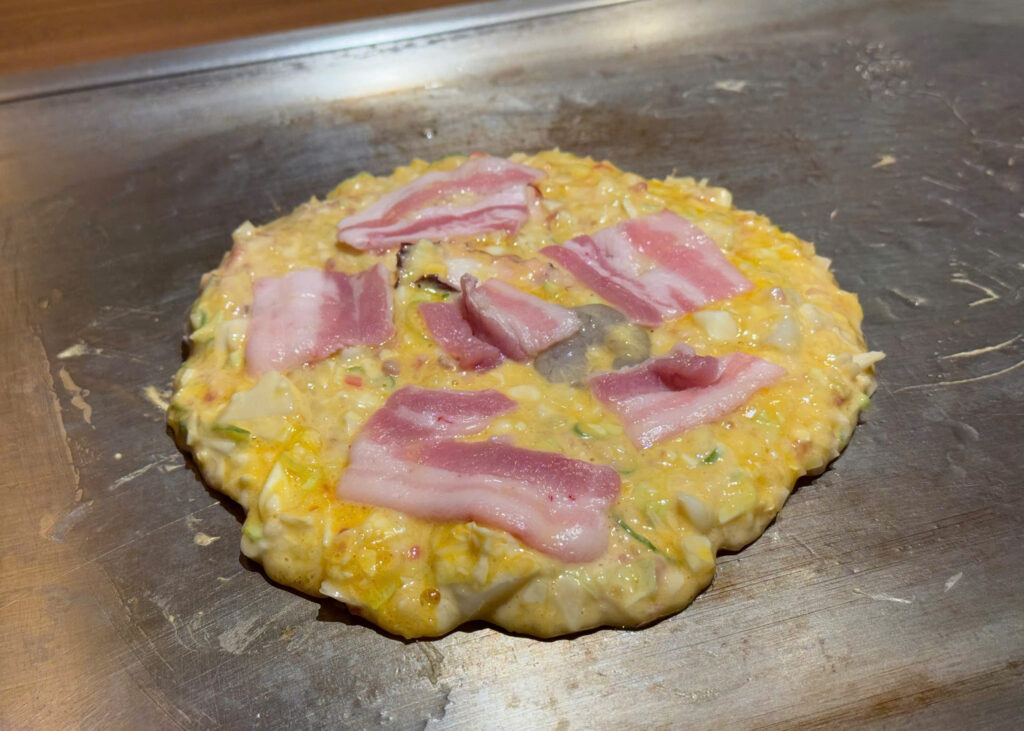
Chef preparing Osaka-style okonomiyaki with cabbage and pork on a hot iron griddle
All ingredients were prepared in a bowl: flour batter (flour + dashi), eggs, shrimp, squid, octopus, and shredded cabbage. The pork belly was placed on a separate plate. The staff mixed everything, poured the batter onto the teppan, added the pork belly on top, and flipped it when the bottom turned golden brown. Once both sides were crispy, she brushed on two sauces — one sweet, one savory — then drizzled mayonnaise in a zigzag pattern.
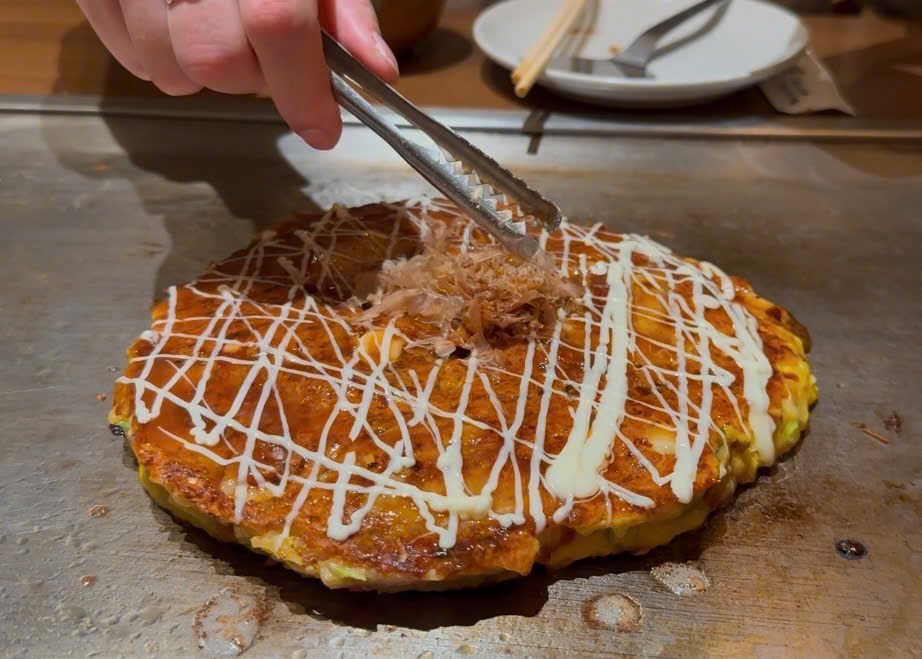
okonomiyaki topped with bonito flakes
Finally, she handed the “finishing touch” to us: topping it with bonito flakes and aonori, which were already placed on the table. Two extra sauces were also available so you could customize the flavor.
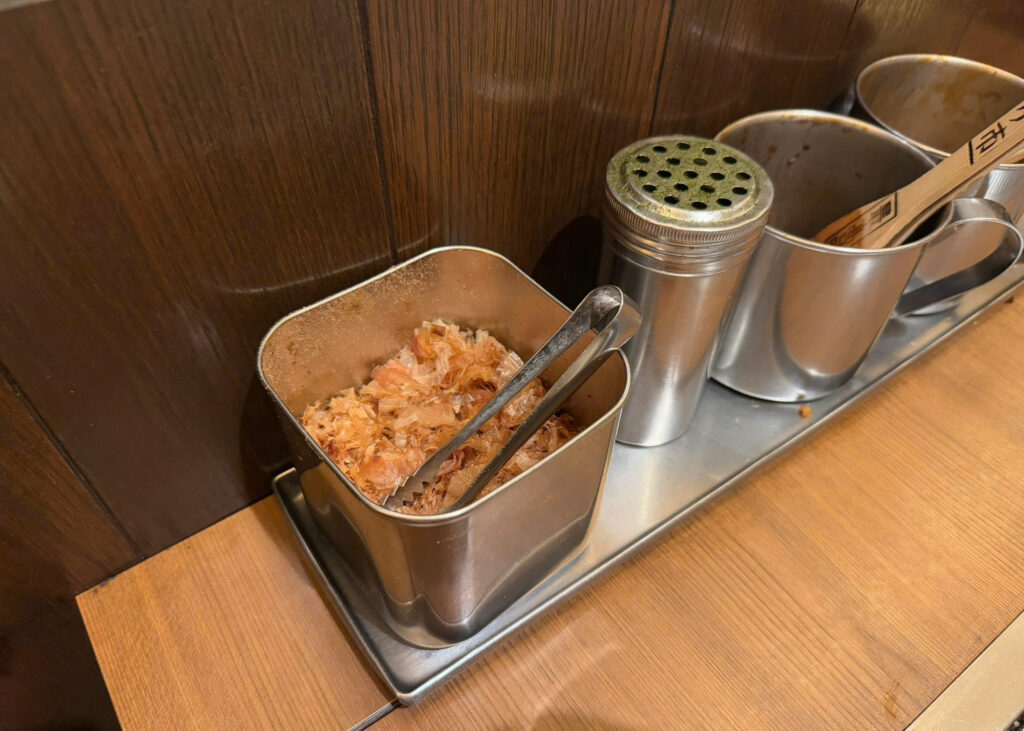
bonito flakes and aonori placed on the table
To eat it, you cut it into wedges (like pizza) using a hera and transfer each slice to your plate.
The warm, crispy, savory pancake — fluffy inside, rich with seafood and pork belly — was irresistible.
Why restaurants are the best experience:
Pros:
- Fresh ingredients
- Proper heat control → fluffy inside, crispy outside
- Customizable fillings (mochi, cheese, extra pork, seafood…)
- Cultural experience of watching it cooked on a teppan
Cons:
- More expensive (900–2,000 yen)
- Long queues during peak hours
- Teppan smoke can cling to your clothes/hair
-
Supermarket Ready-Made Okonomiyaki
You can find okonomiyaki in the Ready-Made Meals or Bento section at supermarkets. They are affordable (around 300–500 yen) and usually freshly cooked that day. The taste is decent — softer than the restaurant version but still satisfying.
However, the texture becomes soggy after a few hours, and it’s difficult to make it crispy again in the microwave. Choices are limited, usually pork or seafood.
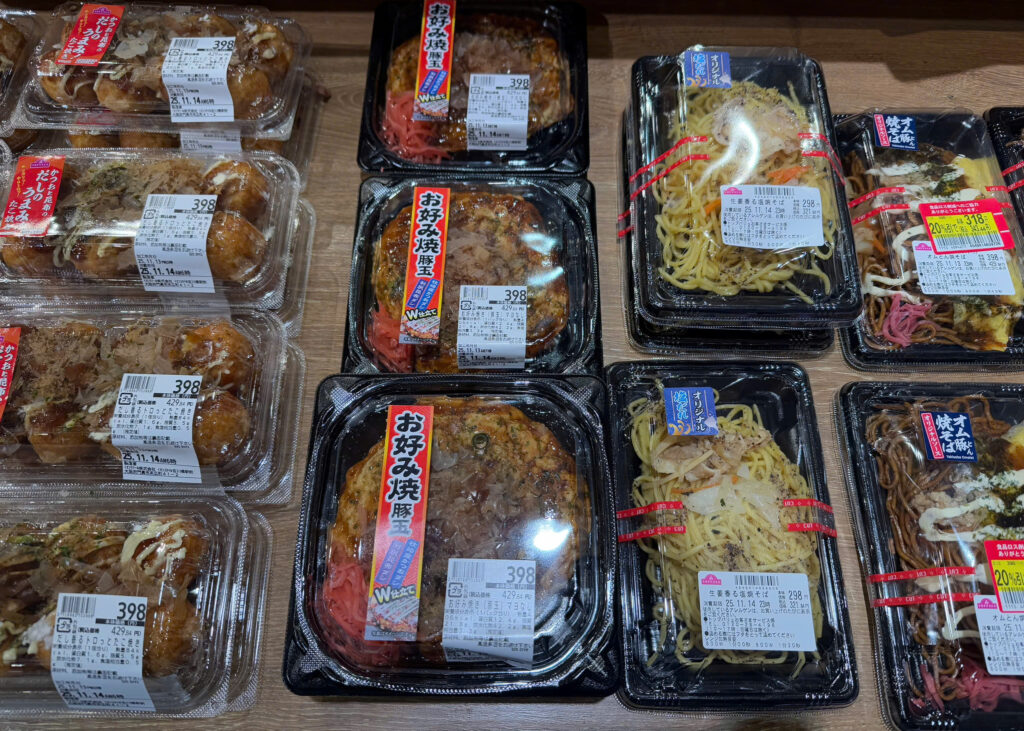
Ready-to-eat supermarket okonomiyaki
-
Frozen Okonomiyaki
Frozen okonomiyaki is the most convenient option. Simply microwave for 6–7 minutes, warm the sauce packet, pour it on top, and finish with seaweed and bonito flakes.
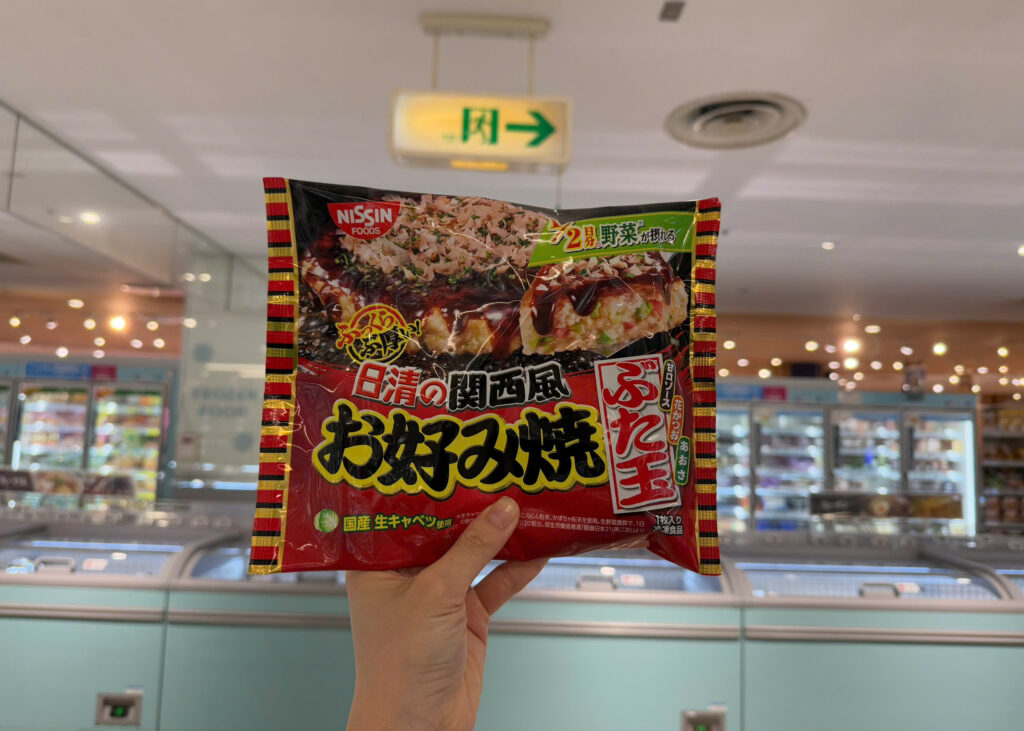
Frozen okonomiyaki in plastic bag
It’s cheap (around 200–300 yen per piece), but the texture is softer and slightly chewy. It’s hard to achieve crispiness, and the flavor is less smoky and rich compared to restaurant or supermarket versions.
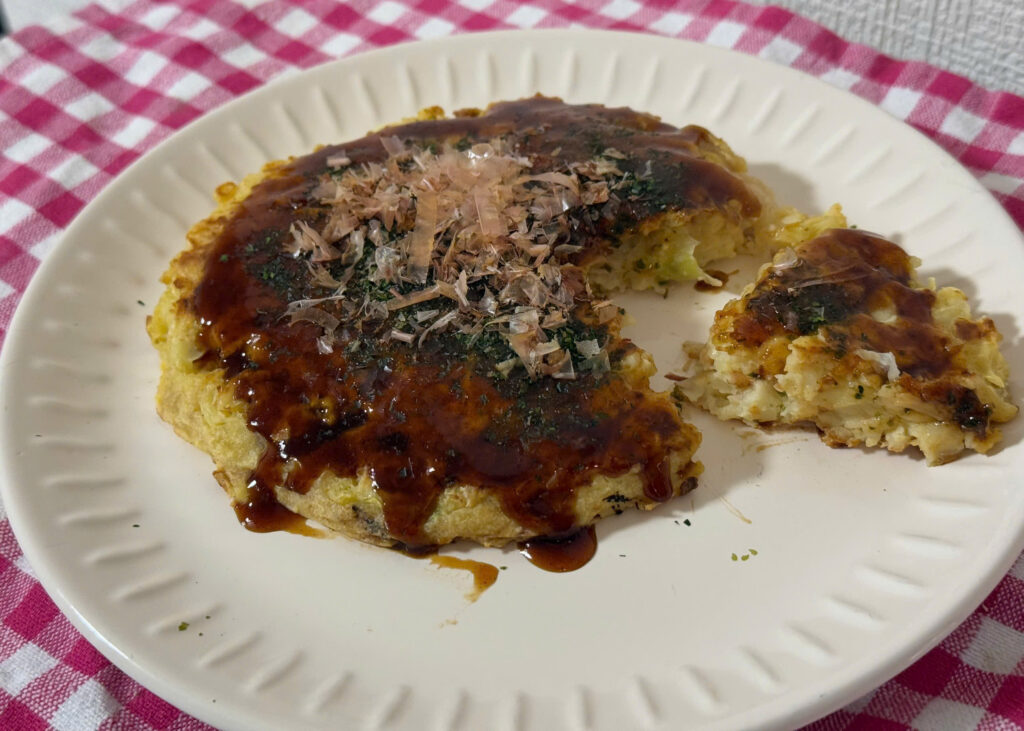
Frozen okonomiyaki after heating it in the microwave at home
So—Which One Should You Try?
Okonomiyaki is a must-try dish when visiting Japan, but what’s the best way to experience it?
My recommendation:
✔ Restaurant okonomiyaki — for the most authentic, memorable, and delicious experience. Watching it cooked on the teppan adds a cultural depth you can’t get anywhere else.
✔ Supermarket ready-meal — great for experiencing everyday Japanese life.
✔ Frozen okonomiyaki — perfect for travelers on a budget or staying in an Airbnb.
Tips for Travelers: How to Enjoy Okonomiyaki Like a Local
- Check the opening hours — many restaurants close in the afternoon
Most okonomiyaki restaurants in Japan follow this schedule:
- Open: 10:00 AM – 3:00 PM
- Break: 3:00 PM – 5:00 PM (preparation time)
- Open again: 5:00 PM – 9:00 PM
If you visit between 3–5 PM, you may find the restaurant closed, so plan your meal time accordingly.
- Avoid peak evening hours
If you want to skip long queues, avoid the busy period between 6–8 PM. Late lunch (2–3 PM) or dinner after 8:30 PM is usually quieter. - Prepare for the “okonomiyaki smell”
Because it’s cooked on a teppan (iron griddle), the smoky aroma might stick to your clothes or hair. Be mindful if you’re going somewhere formal after eating. - Ordering is easy — just choose your toppings
Common add-ons include:
- cheese
- mochi
- extra pork
- squid or shrimp
- kimchi
- double cabbage
- or noodles (Hiroshima style)
To ask for recommendations:
「おすすめはありますか?」(Osusume wa arimasu ka?)
- How to ask for more or less sauce
Some travelers prefer lighter sauce. Use these simple phrases:
- Sauce less → ソース少なめでお願いします (Sōsu sukuname de onegaishimasu)
- More sauce → ソース多めでお願いします (Sōsu ōme de onegaishimasu)
- More mayo → マヨネーズ多めでお願いします (Mayonēzu ōme de onegaishimasu)
- The teppan is very hot
Even though it’s fun to watch the cooking process up close, the metal surface is extremely hot.
Avoid placing your phone, bag, or hands near the edge of the table.
- Payment tips
Many local okonomiyaki restaurants:
- are cash-friendly (some don’t accept credit cards)
- require you to order at least one dish per person
- charge extra for toppings
- let you share one large okonomiyaki — just ask politely
Say:
取り分けてもいいですか?(Toriwakete mo ii desu ka?)
= “Is it okay if we share?”
Thank you for sharing this okonomiyaki journey with me!
If you love exploring Japanese food, travel tips, and honest food stories, follow my website for more delicious adventures — and let’s discover Japan one bite at a time.